Start with the label job
Environment, label life, surface, width, and daily volume decide more than the printer brand.
US warehouse and manufacturing labels
A practical selector for thermal transfer labels, direct thermal stock, ribbons, adhesives, printer class, and compatibility questions that warehouse and facility teams should verify.
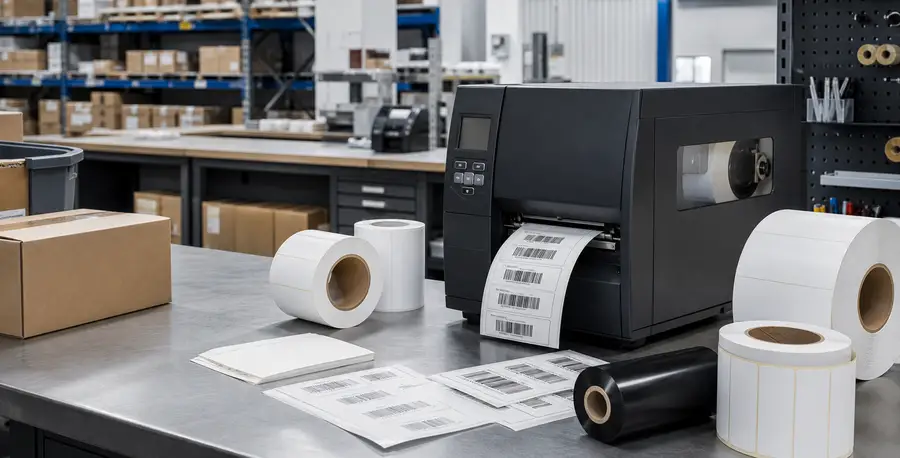
Environment, label life, surface, width, and daily volume decide more than the printer brand.
Core size, sensor type, adhesive temperature range, roll OD, and ribbon chemistry must match the printer model.
Use the selector output as a checklist for supplier samples, not as a final compatibility guarantee.
Application guide
Choose barcode warehouse labels by workflow, surface, scanner distance, label size, adhesive, printer class, and sample testing.
Material guide
Choose thermal transfer label materials, adhesives, ribbons, and sample tests for warehouse, freezer, outdoor, chemical, and asset tag workflows.
Application guide
Plan freezer label material, adhesive, ribbon, and application tests for cold chain cartons, racks, and stored inventory.
Application guide
Plan durable asset tag labels with polyester stock, resin ribbon, high-tack adhesive, 300 dpi printing, and surface-specific sample tests.
Compatibility checklist
A neutral checklist for verifying Zebra-compatible labels, ribbons, sensors, cores, widths, and sample tests before bulk ordering.
Compatibility checklist
Verify label roll outside diameter, core size, media width, ribbon width, and wound direction before ordering thermal printer supplies.